

Anatomy for Dancers (Part One)

Have you ever stood in dance class and wondered "what is my teacher going on about?" when they are spouting some big Latin terms. Think, clearly show me the difference between plantarflexion and dorsiflexion. Chances are they were telling you do something using the real anatomical terms. And I get it, this is dance class, not life sciences, so why would you (as the dancer) need to know the difference between your ulna and your humerus? Here's the thing, your body is your instrument and it is probably the most important instrument the world has. In order to use it to the best of your ability, you've got to be more clued up than simply knowing the difference between your arms and your legs. So, grab something to drink, and join me as we peel back the layers of the body to learn the secrets within.
Why should dancers care about anatomy?

Think of your body as an F1 car. You are not about to go and take it for a spin on the track without knowing how to drive it, right? Well, that is in fact what dancers do everyday. Understanding your own anatomy unlocks so many cool tricks. How to jump higher, turn out further, and pop harder to name a few. The most important benefit, however, is being able to stay INJURY FREE. When you know which bone is where and which one connects to which you will be more in control of your movement. And a dancer in control is a dancer that everyone wants to watch. An added benefit is being able to understand your teacher better. So next time they tell you to tuck your tail bone, you won't be looking in the mirror for the tail you have apparently grown overnight.

The SKELETON: Your Body's Internal Scaffolding
The skeletal system is the fancy term for the 206 bones that make up the human body. Without a skeleton you wouldn't be able to do much but lie on the floor as a very talented puddle.
Your skeletal system has three main jobs:
Support: it holds you upright and gives you form.
Protection: it stops things like impact from hurting your heart, lungs, brain and spinal cord.
Movement: your bones act as the levers that allow for your muscles to make all the cool shapes and lines you get taught every week.
Fun Fact! We are all born with 300 bones, not 206. Over time as you develop and mature some of your bones fuse together. They don't vanish into the ether, they just team up with other bones to form a bigger and stronger one.
Meet The Bones (Dance Floor Edition)
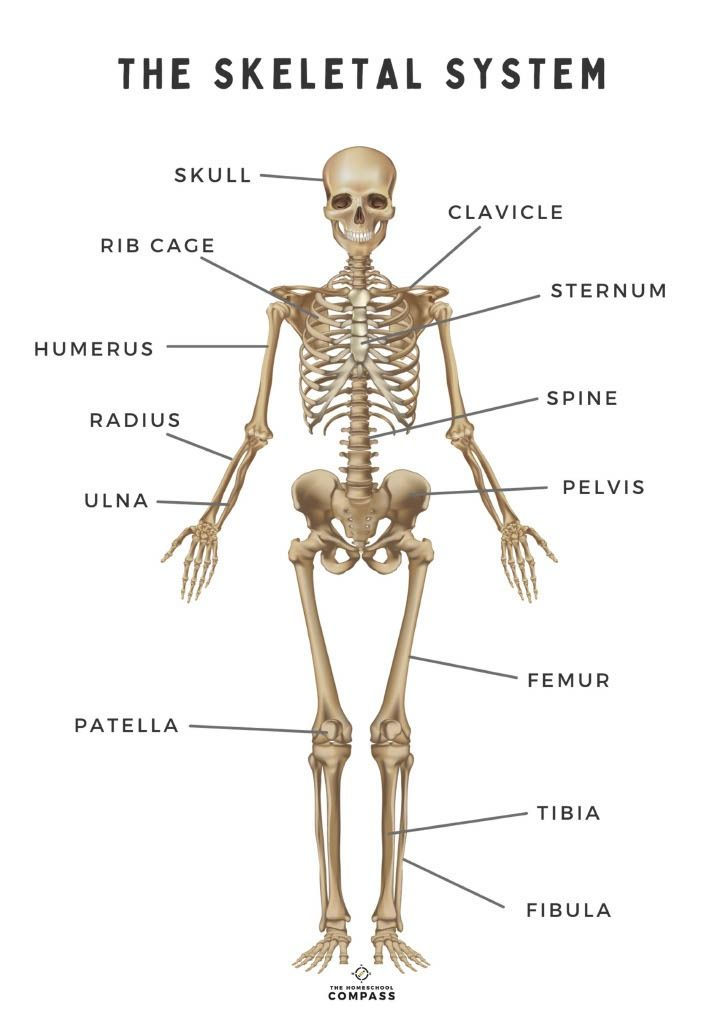
Now, I'm not going to bore you by listing all 206 bones, because then we would be here until the next end of year concert. I am going to break down the most important members of the skeletal system. For every bone I will label the scientific name, the common name and finally where you can find it in the body. Get ready to learn some Latin!
Scientific Name | Common Name | Where is it? |
Cranium | Skull | Protecting your brain and giving you somewhere to make a bun. |
Clavicle | Collarbone | Running across the top of your chest. |
Scapula | Shoulder blade | These are your wings that your ballet teacher is always telling you to pull out and down. |
Sternum | Breastbone | Running down the centre of your chest. |
Humerus | Upper arm | Between your shoulder and your elbow; and it's not very humorous when you hit it. |
Radius and Ulna | Forearm | Between your elbow and your wrist, not just one bone but two. |
Vertebrae | Spine | The stack of bones running the length of your back that your modern teacher keeps telling you to keep straight and your hip hop teacher keeps telling you to bend. |
Pelvis | Hips | The big round bones at the base of your spine that your legs come out of. |
Femur | Thigh bone | Between your hips and your knees and the strongest bone you've got. |
Patella | Knee cap | The little shield on the front of your knee that bruises when you do floor work. |
Tibia and Fibula | Shin bones | The two bones in your lower leg, and yes, your legs are almost symmetrical to your arms. |
Phalanges | Toes and fingers | The tiny little bones at the end of your limbs. |
Bona-fide Interesting Facts!
The femur is a beast: the thigh bone is the longest and strongest bone. It is stronger than concrete. So when you are doing heavy jumps, remember, your legs are made for this.
Half of your bones are in your hands and your feet: there are 52 bones in the feet alone. That's why you can articulate your feet so precisely, they are a masterful feat of engineering.
The "funny bone" is not a bone at all: when you whack your elbow and experience that sharp pain followed by a tingling sensation, it is because you have hit your Ulnar Nerve. It gained the nickname "the funny bone" because it sits next to your humerus bone. Isn't that just femur-slappingly funny...
What's Next?

Now that you know what's holding you up, you're one step ahead of other dancers. But bones are not much use if they can't move - that's why they love to work with their best friends from The Muscular System.
That brings our skele-tour to a close. We hope you found this post humerus, err, we mean humorous. Check back in soon to see if our muscle jokes are just as 'strong'!
DanceIt Studios - We don't reach for the stars, we create them.


Comments